Weekend Art
Series of photographs by Aleksandar Battista Ilić
Performance by Aleksandar Battista Ilić, Tomislav Gotovac, and Ivana Keser
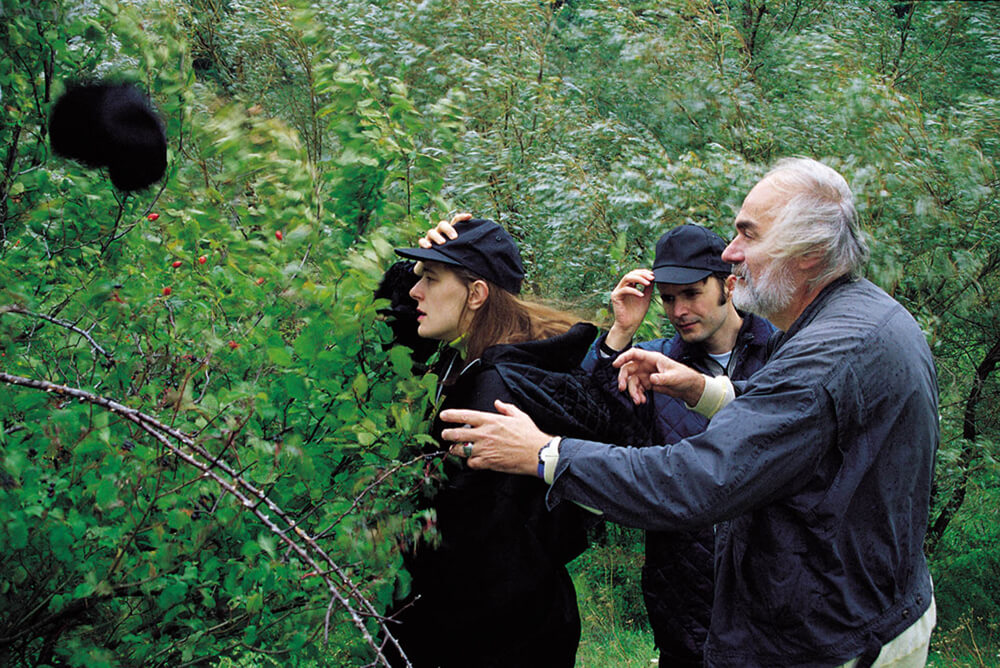
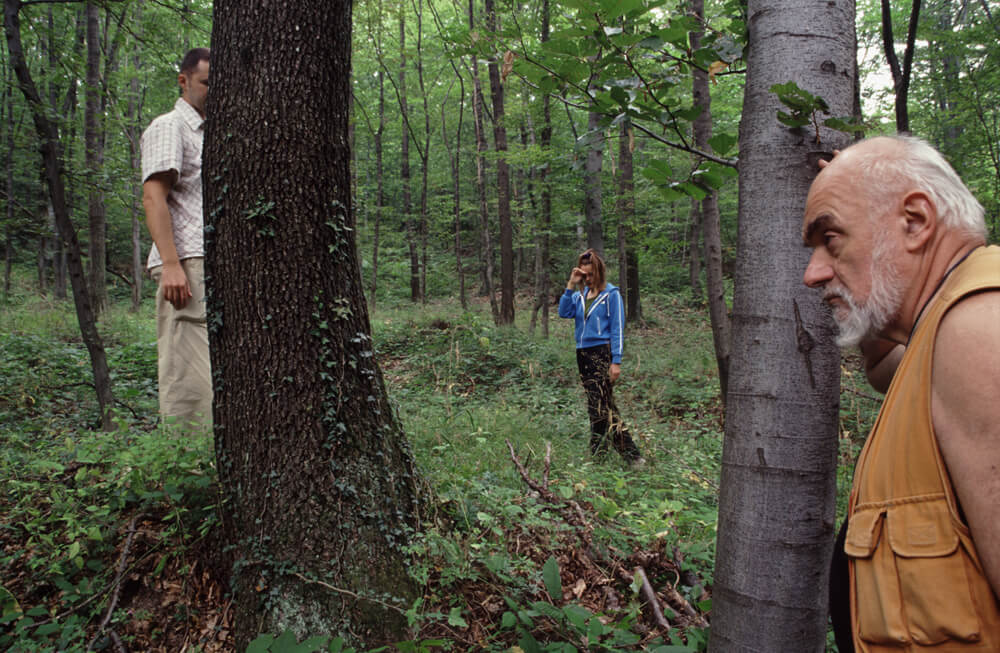
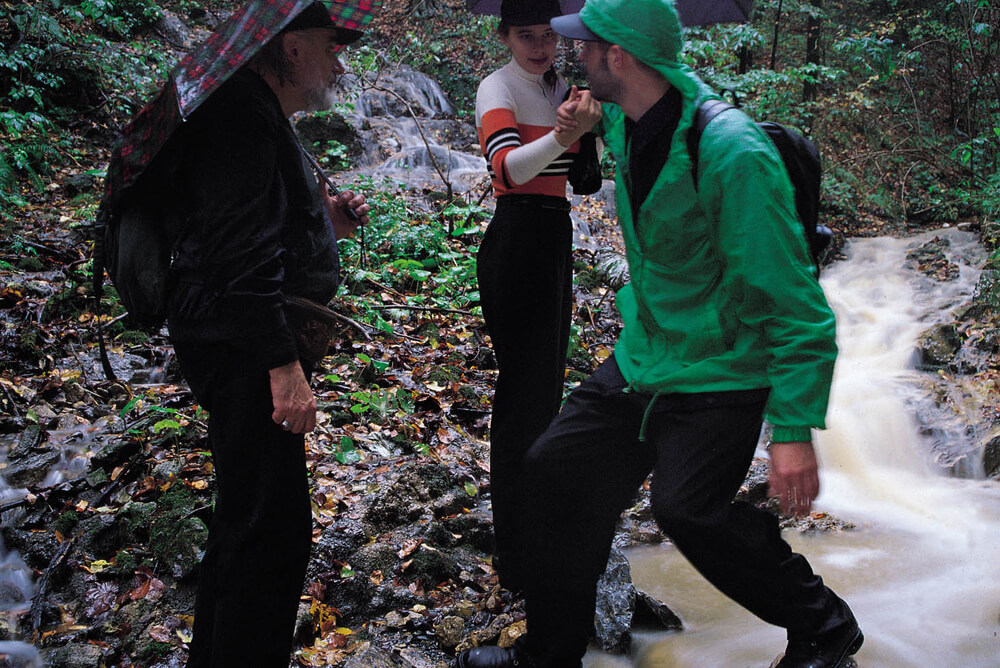
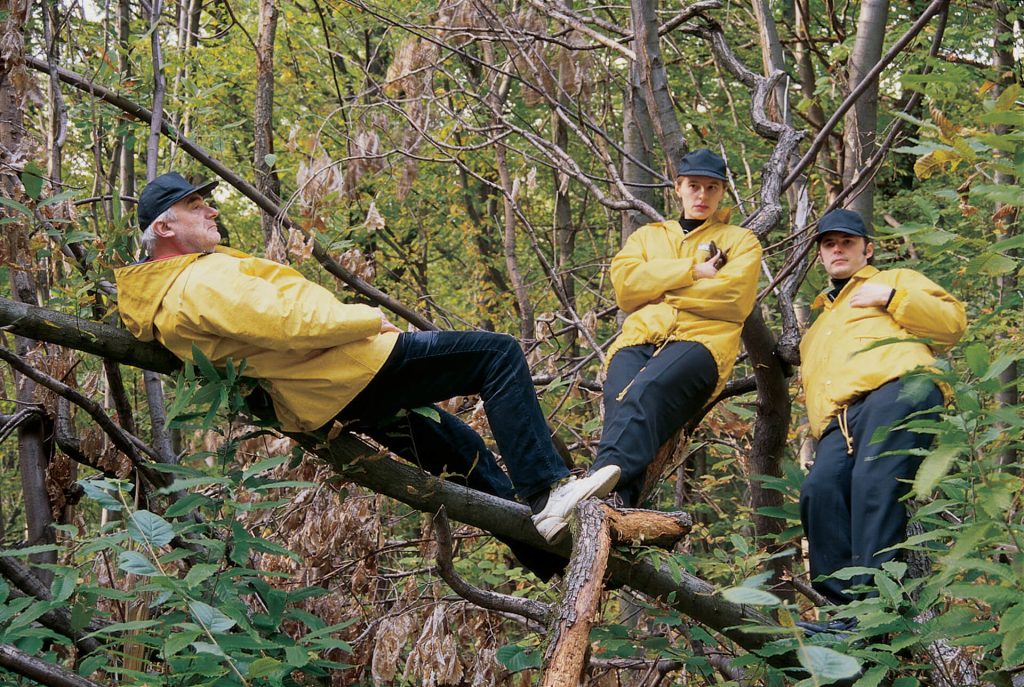
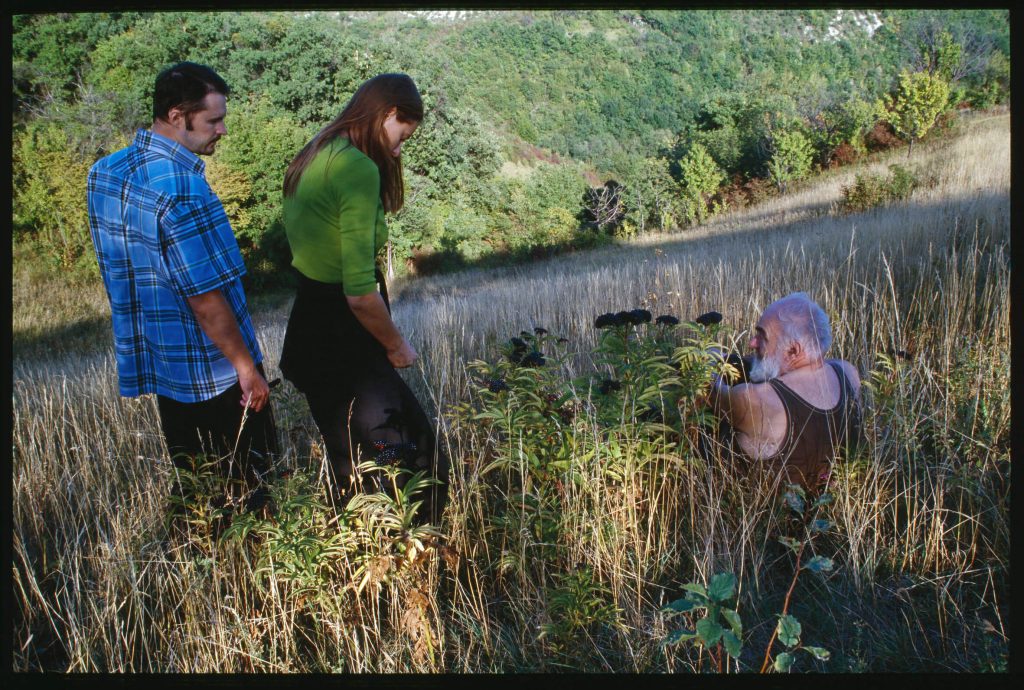
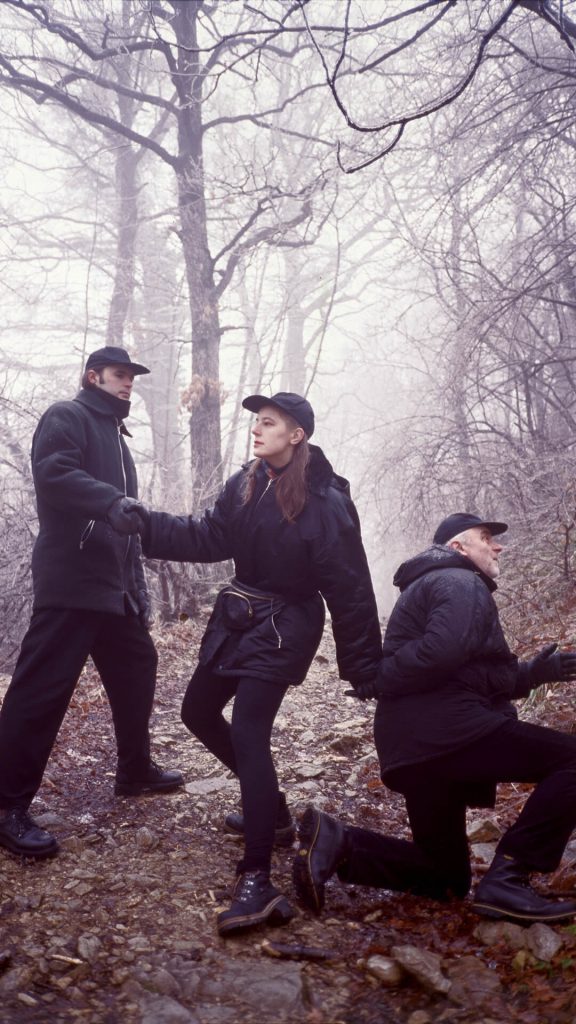
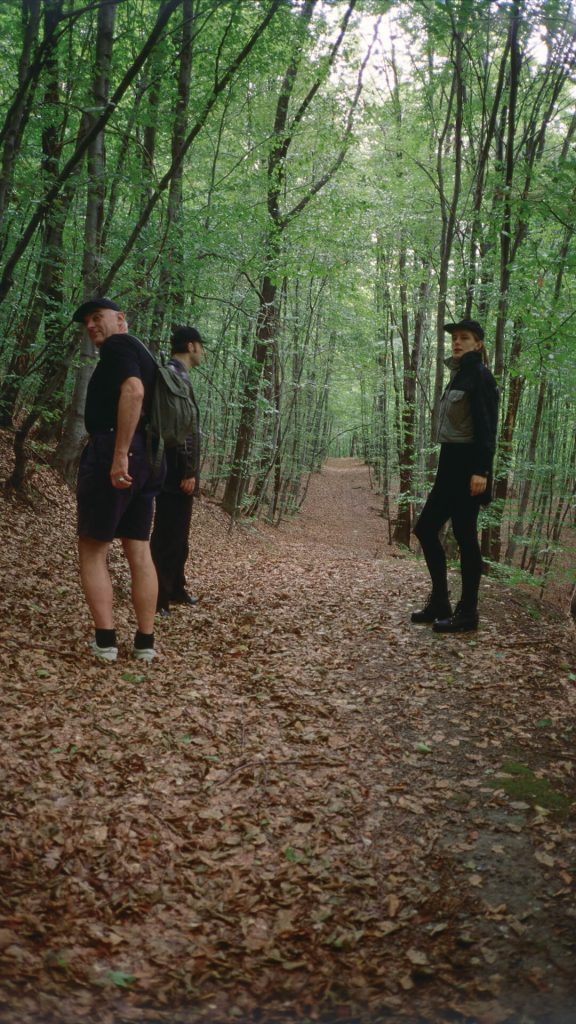
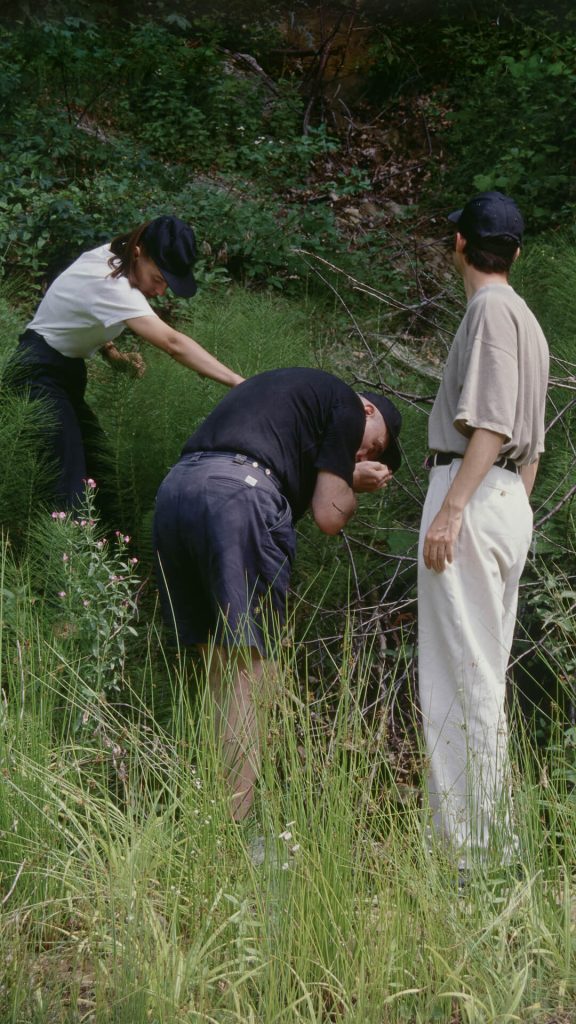
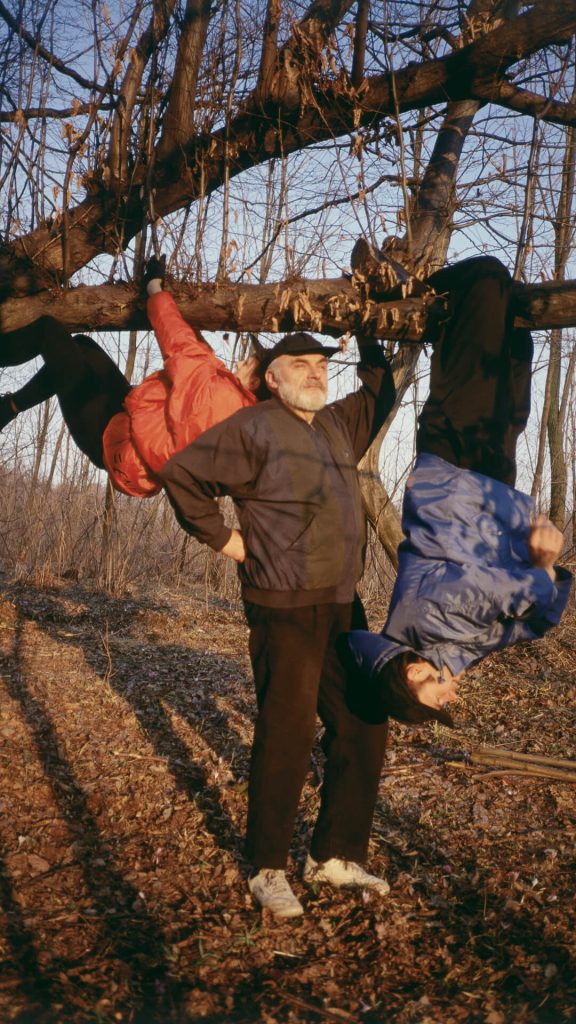
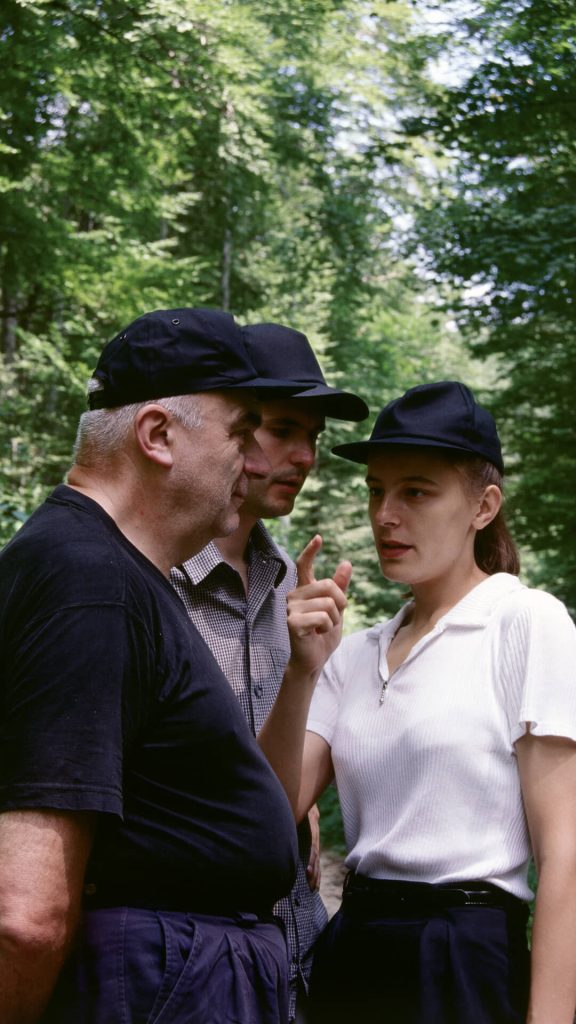
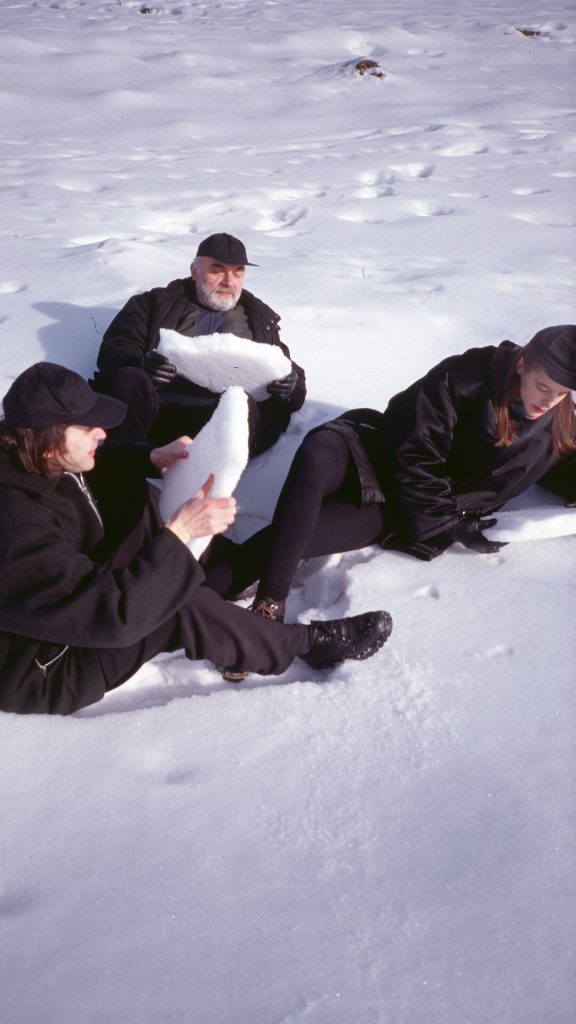
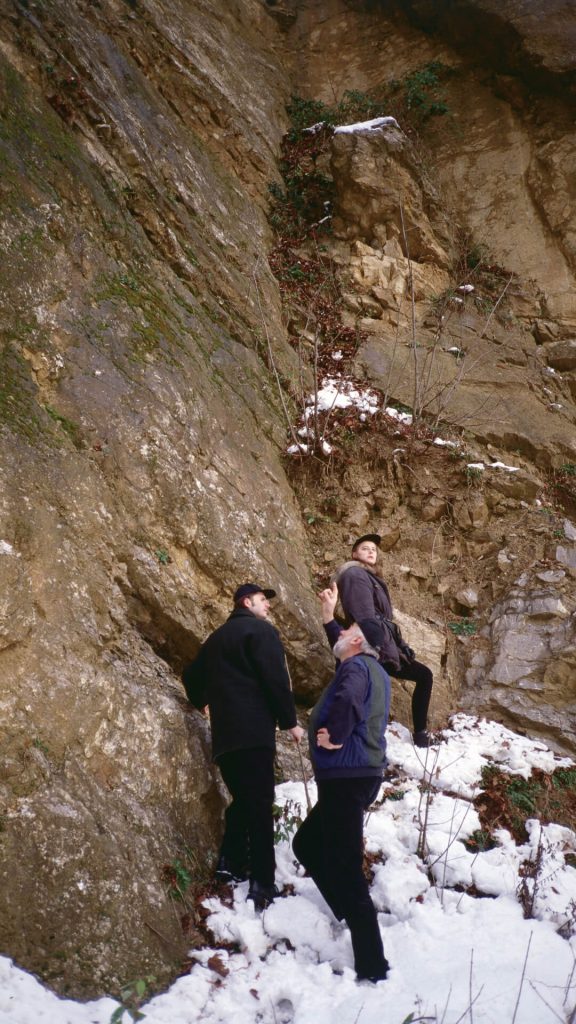
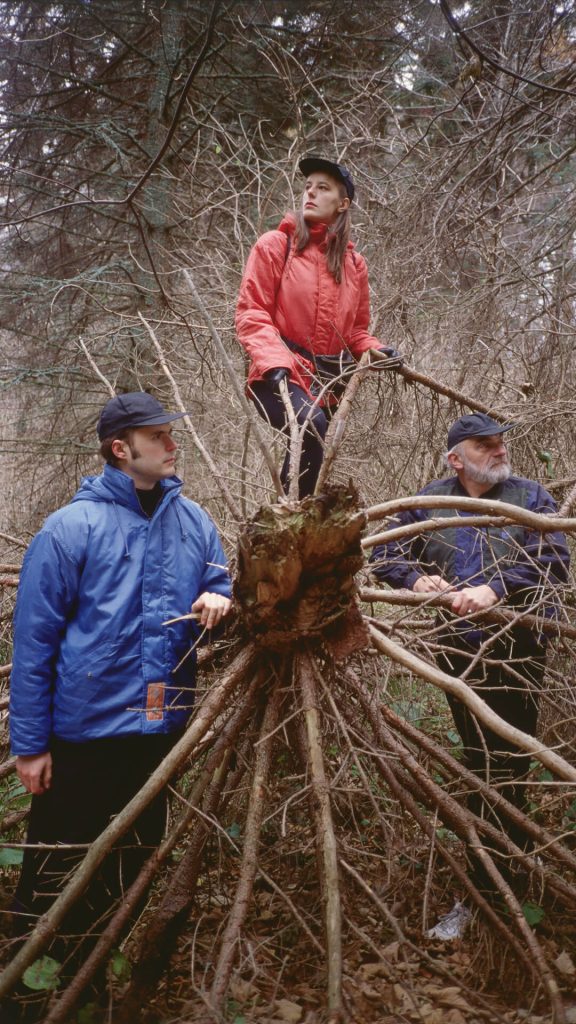
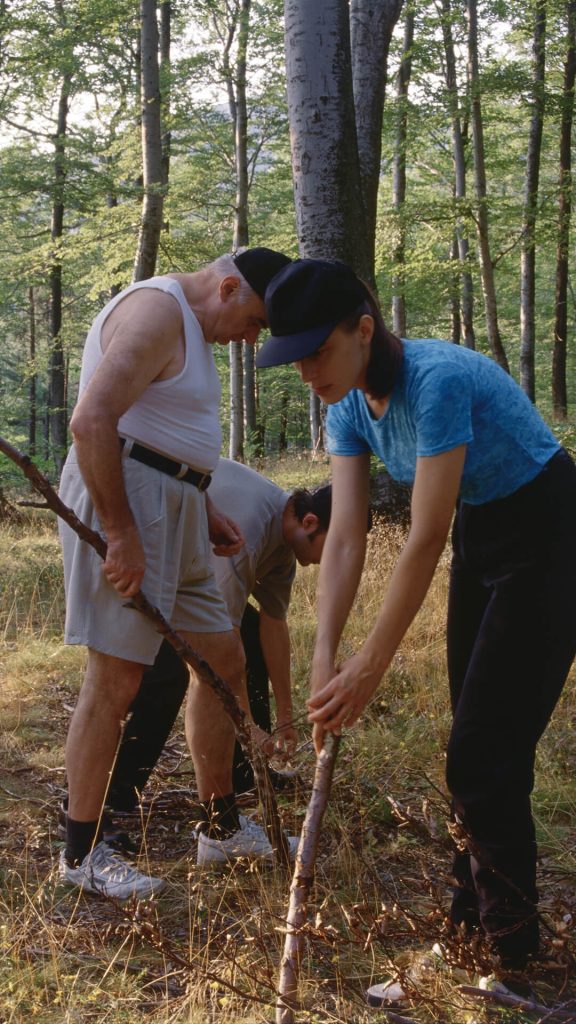
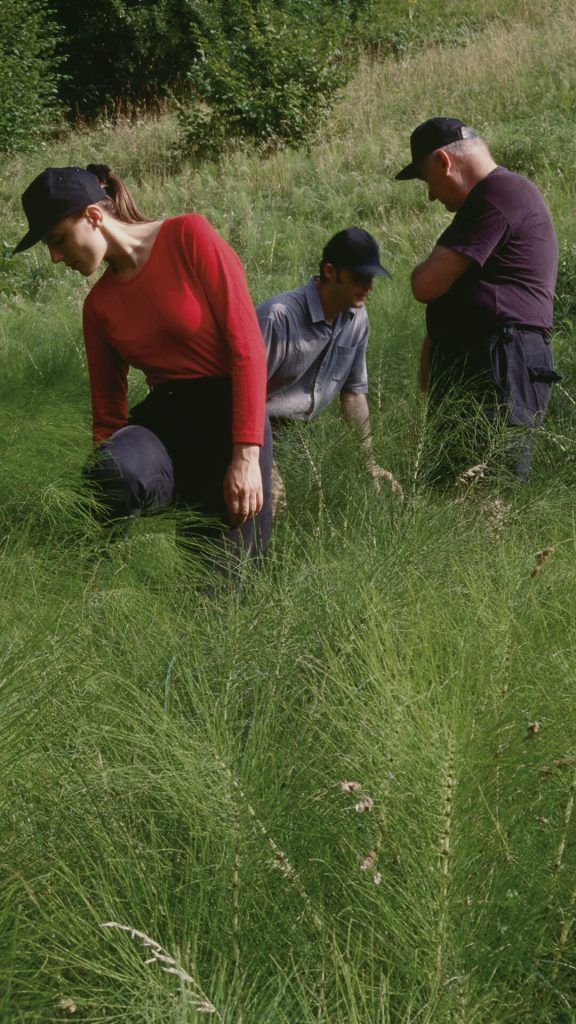
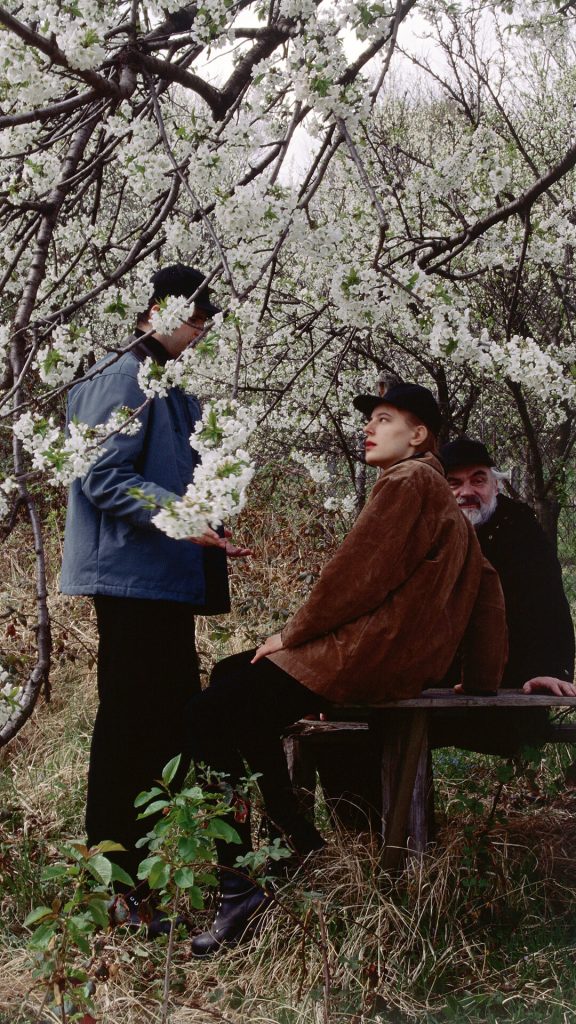
The ten-year performance project Weekend Art: Hallelujah the Hill (1995–2005) consists of a series of more than 5,000 photographs taken with a self-timer on Mount Medvednica, exclusively on Sundays. The project was dedicated to Adolfas Mekas’s film Hallelujah the Hills (1963).
Depending on the context in which it was presented, the performance was interpreted in radically different ways in Croatia, Ireland, Switzerland, Spain, and Japan. Readings ranged from viewing the artist’s appearance as de-ideologized and detached from political narratives to understanding the work as a radical political statement. The project consisted of marking toponyms on a mountain situated at the margins of social and political events, through a sustained performative action carried out without an audience.
As a long-term artistic practice, Weekend Art: Hallelujah the Hill explored questions of presence, place, repetition, memory, and the relationship between the individual and the landscape.
“We are so fond of being out among Nature because it has no opinions about us.”
— Friedrich Nietzsche
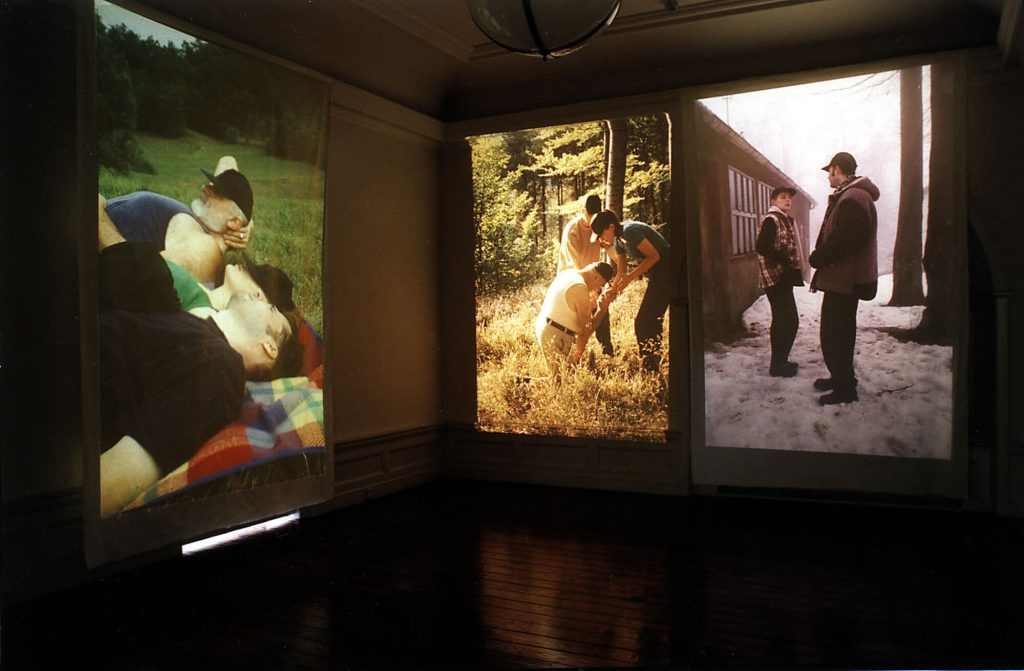
Three slide projections at three bodies
Marking the Territory, The Irish Museum of Modern Art, Dublin Performance Week; Museum of Modern Art, Curator: Marina Abramović, Dublin 2001
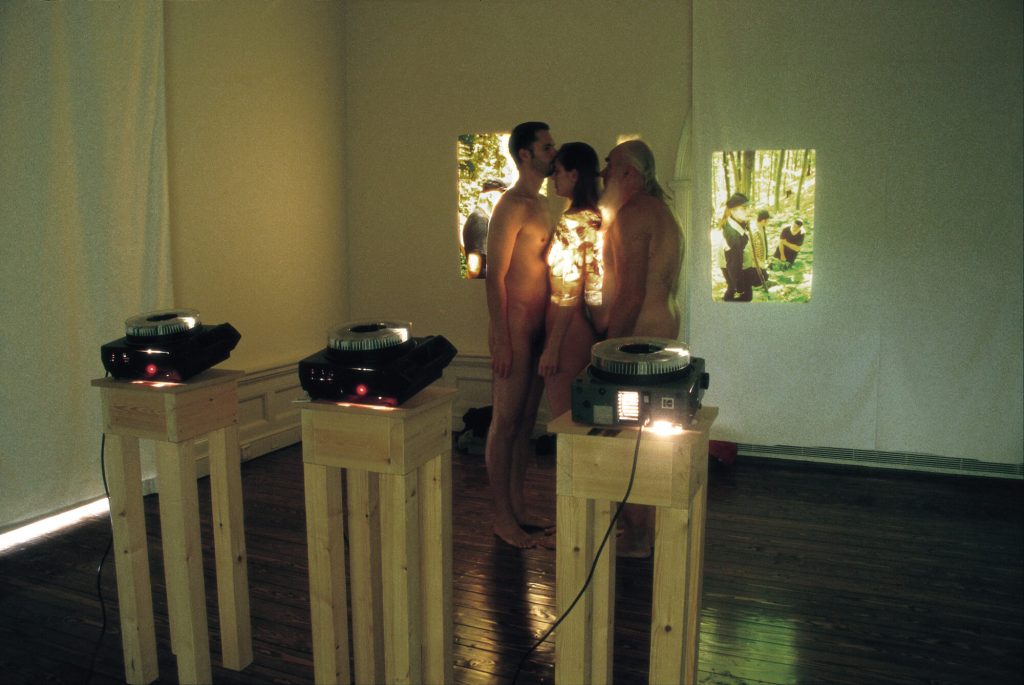
Three slide projections at three bodies
Marking the Territory, The Irish Museum of Modern Art, Dublin Performance Week; Museum of Modern Art, Curator: Marina Abramović, Dublin 2001

Three slide projections at three bodies
Marking the Territory, The Irish Museum of Modern Art, Dublin Performance Week; Museum of Modern Art, Curator: Marina Abramović, Dublin 2001

Three slide projections at three bodies
Kyoto biennial, Kyoto Art Center, Kyoto, 2003
From Performance Without an Audience to Public Performance
Weekend Art: Hallelujah the Hill originated as a series of spontaneous walks that gradually evolved into an artistic statement. For Aleksandar Battista Ilić and Ivana Keser, who both worked in newspapers during the week, and for Tomislav Gotovac, who worked as a freelance artist, these Sunday excursions became a form of art therapy after long working days.
The project was conceived as a film realized through slide photography, largely due to the lack of funding for film production. Two photographic approaches emerged throughout the project: staged photographs and documentary photographs, ranging from improvised scenes to pastoral images.
Curators have interpreted the work in remarkably different ways, often emphasizing opposing aspects of the project. French curator Jérôme Sans described it as “a work of art based on the de-ideologization of reality” (Farniente, Amiens). Slovenian curator Zdenka Badovinac considered it “an example of a work rooted in social reality” (Body and the East, Ljubljana, 1998). For Catalan curator David G. Torres, the decision to leave the gallery, the city, and the art scene behind and repeatedly return to the mountain represented “a political gesture” (Vida Política, Sala Montcada, Fundació “la Caixa”, Barcelona, 1999).
During the final two years of the project, the performance was carried out by only two participants due to Tomislav Gotovac’s illness.
The excursions to the mountain consisted of walking, resting, picnicking, and long conversations. Many scenes were repeated over the years, yet the same place never offered the same conditions: the light, atmosphere, weather, and seasons were always changing. Much of the terrain was difficult to access. On several occasions we became lost in the forest despite knowing the mountain well, often because of forestry work or missing trail markers. At the time there was no GPS, only paper maps. Each of us knew different old paths, and we rarely possessed adequate mountain equipment.
Travelling to the mountain in all weather conditions—including storms, lightning, rain, snow, extreme heat, and freezing temperatures—we encountered countless faces of Medvednica: steppes, Irish-like pastures, Finnish forests, alpine cliffs, cold streams, and dense woodland. We often returned exhausted, but happy.
Weekend Art: Hallelujah the Hill was dedicated to Jonas Mekas, the Lithuanian filmmaker whose Hallelujah the Hills (1963) combined slapstick comedy, satire of the American way of life, and a celebration of friendship.

The project was an outsider performance without an audience, carried out on a largely unknown hill—or, more accurately, mountain, since Medvednica’s highest peak reaches 1,030 meters. While many artists of the 1960s and 1970s sought to shock audiences, by the 1990s such gestures seemed unnecessary. We preferred to move towards the margins.
Responses to the project varied significantly across cultures. In Japan, audiences politely remained until the end of the performance, requiring the performers to stand for almost two hours. In Barcelona, the absence of an audience was interpreted as a powerful political statement. In Ireland, the work was received as highly poetic; two women told us that watching the projected images of changing seasons passing across two younger bodies and one older body moved them to tears.
Since the performance was created by two visual artists and a film director, iconography played a central role. We frequently discussed the history of painting and watched classic films together repeatedly, both in cinemas and at home. The work contains numerous references to major filmmakers, including Akira Kurosawa and Alfred Hitchcock.
Weekend Art: Hallelujah the Hill was also among the early interactive artworks disseminated via the internet. Through a project curated by Ami Barak for the regional contemporary art fund FRAC Occitanie Montpellier, images from this unknown mountain were transmitted every Monday and published on the institution’s website.
The project was additionally presented through artists’ newspapers produced by Ivana Keser and through three series of postcards distributed internationally.
Medvednica itself possesses a rich artistic history. The Croatian-French poet Radovan Ivšić found refuge in its forests. The members of the Gorgona Group, one of Croatia’s most significant avant-garde collectives, left one one of their paintings for a year on Medvednica. During his participation in the Music Biennale Zagreb, John Cage searched for mushrooms there under the guidance of the philosopher and music theorist Ivan Focht. Tomislav Gotovac also used the mountain as a setting for his photographic series Showing Elle in the 1960s.
Weekend Art: Hallelujah the Hill does not merely document the photographic production of artists taking a walk. Rather, it projects a contemporary image of the artist—an image shaped, at least from the artists’ perspective, by forms of social integration that enable artistic practice to exist within everyday life. As part of the social body, through the ordinary ritual of a Sunday walk, the artist acquires legitimacy for artistic work.
“Seasons are changing, we are changing, time is passing. We are not spending time; time is spending us.”
— Ivana Keser

Sala de Montcada, Fundació La Casixa, Barcelona, 2000

Kyoto Art biennial, Kyoto,2003.

One Sixth of the Earth Ecologies of Image
ZKM / Center fro Art & Media / MUSAC , León, Spain, curator; Mark Nash, 2013.
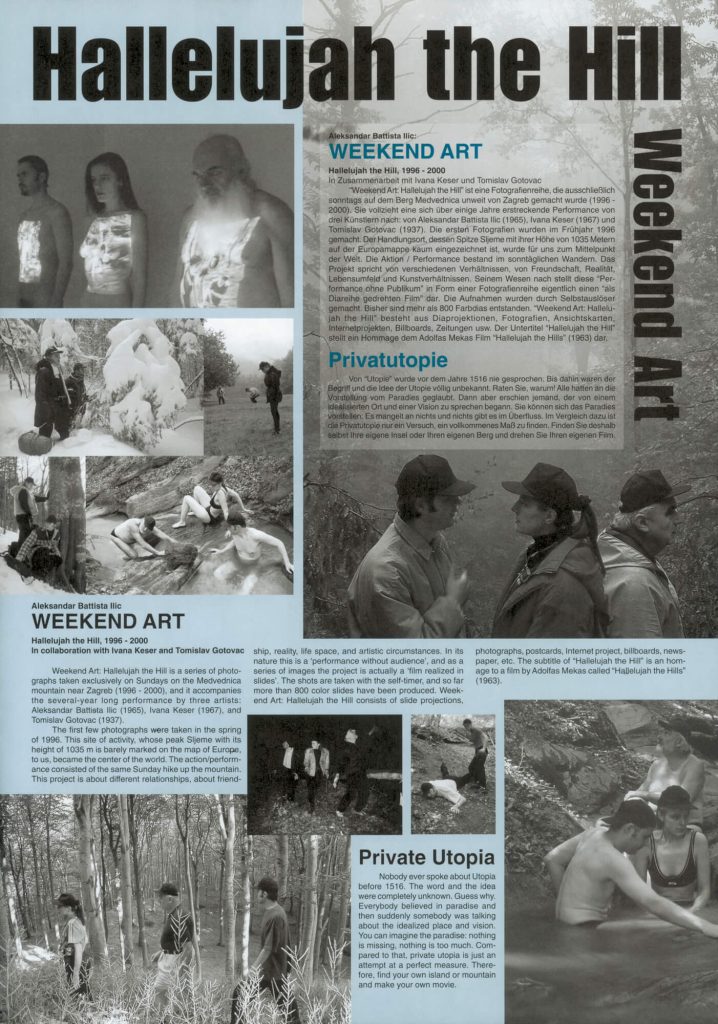
Ivana Keser, Community Art Zeitung, Zagreb- Berlin, 2002.
Reprodukcija
Series of photographs by Aleksandar Battista Ilić
Performance by Aleksandar Battista Ilić, Tomislav Gotovac, and Ivana Keser